Extension Springs
Extension springs are used in mechanical systems where an axial stretching or elongation force is applied rather than a compressive force. They allow mechanisms to achieve controlled resistance to such motion, provide a counteracting return force, and/or control the tension load. They are integral components of such mechanisms, which encompass a wide range of applications.
What Are Extension Springs?
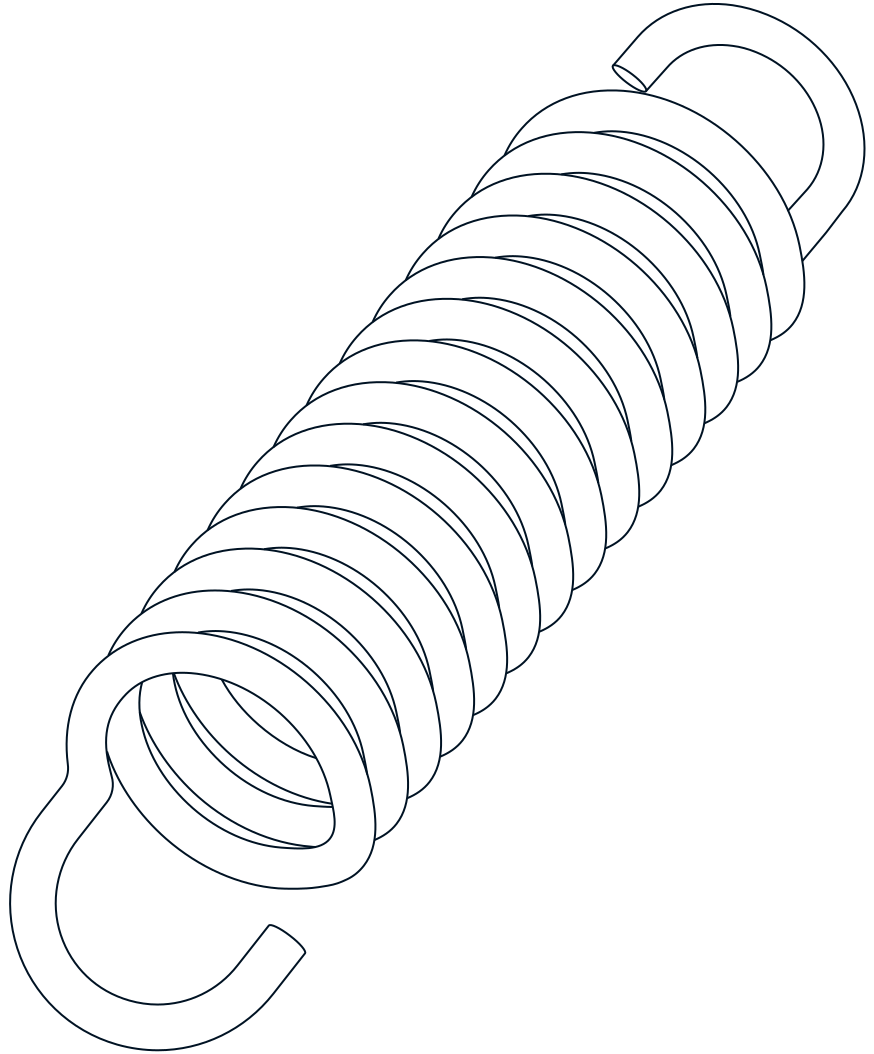
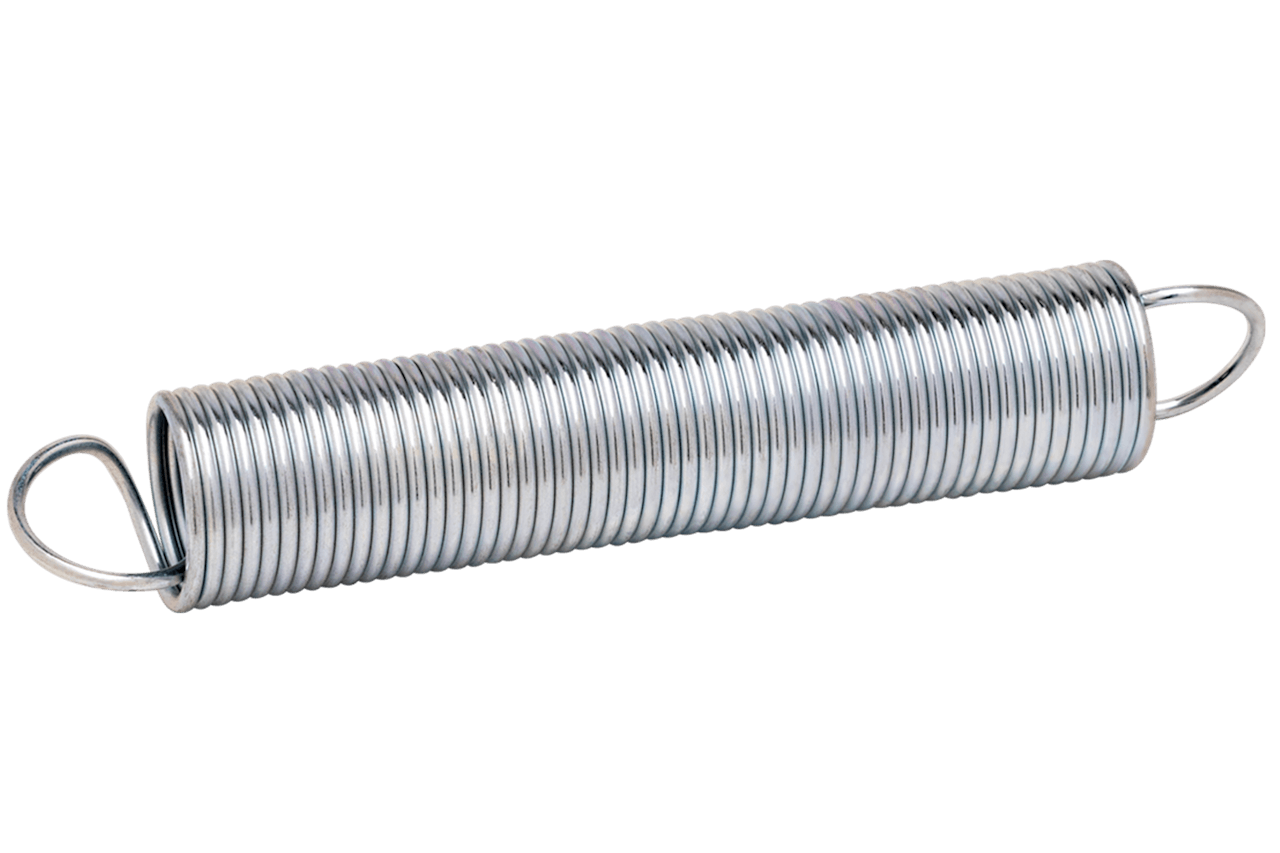
Extension springs are helical coil springs designed to extend under tensile loads. They store energy when extended and exert a restoring force that pulls the components back together upon unloading. Such springs are commonly used in mechanisms in which components move apart and require a controlled resistance or a return force during unloading.
How Do Extension Springs Work?
Extension Springs resist tension loads at the spring ends, which pull the helical coils apart when the applied loads exceed the inherent initial tension required to separate the coils. The spring elongates elastically, creating a deformation and stored energy manifesting as a counteractive force in the opposite direction of the spring extension. Upon unloading, the stored energy provides a return force that brings the components back together.
Key Design Characteristics of Extension Springs
The following geometric properties are key design characteristics to use when shopping for extension springs.
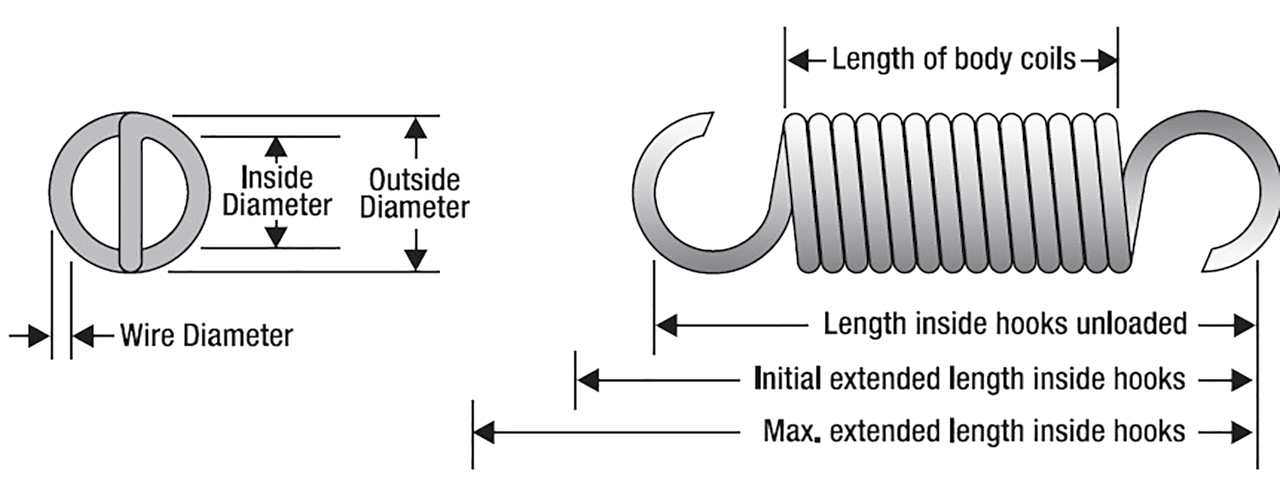
- Wire Diameter is the thickness of the wire that forms the spring into a helical shape.
- Outer Diameter is the size of the formed helical coils, cited as the diameter of the coil’s outer surfaces.
- Free Length is the total length of the spring when it is unextended, typically measured from the inside of the extension spring’s hooks.
- Spring Rate is a measure of the force required to extend the spring by a designated unit of length, commonly specified in lb/in units.
- Initial Tension is the force that must be overcome before the spring increases in length. As such, it represents the force required to initially separate the spring’s helical coils just enough to observe light passing through them.
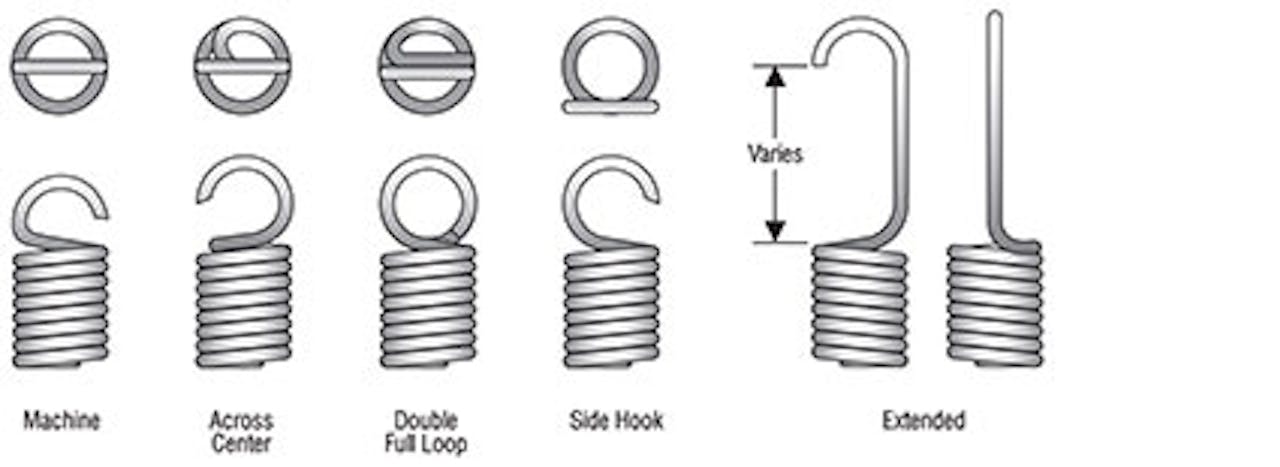
The End Type refers to the wire's configuration after the helical coils. The ends attach the spring to the mechanism. Below are some of the most common end types, including machine hooks and full-loop geometries.

Browse More Extension Springs
Browse our interactive extension spring catalog to shop for thousands of in-stock extension springs available today. You can browse by material, size, finish, and more!
Download the spring CAD geometry before purchasing to ensure your spring will fit your application. Place your order now and take advantage of same-day shipping!

Custom Extension Springs
Century Spring proudly offers state-of-the-art manufacturing equipment to produce customized extension springs that meet your application’s specifications. We provide complete prototyping and tooling assistance services. We have cutting-edge CNC compression self-monitoring and coiling machinery to manufacture custom sizes and styles to fit any design envelope.
We also feature a wide selection of available spring materials and surface finishes that will protect your extension springs against corrosion and extreme temperature environments while increasing the functional life of your machine design.Whether you are in the design or procurement phase, we have the knowledge, experience, and tools to partner with you to design and manufacture the custom extension springs you need.
Ready to get started? Request a Quote.
Custom Extension Springs
Custom Manufacturing Capabilities
Century Spring has the in-house engineering experience and state-of-the-art manufacturing equipment to mass-produce custom extension springs to meet your application’s specifications.
We offer custom extension spring geometries, wire diameters, and end configurations. We can design and fabricate custom springs from specialized materials, including stainless steel, high-carbon steel, and nickel alloys. We can apply numerous surface finishes, such as Zinc, Black Oxide, and Gold Iridite, to achieve additional corrosion resistance.
We are ready to partner with you to design an extension spring solution that can withstand the most demanding applications. Our custom spring solutions operate continuously under high loading in extreme environments, such as the vacuum of space.
Our engineers are ready to advise on optimal geometry, spring winding, and material and surface finish selection. Don’t waste another minute; reach out to one of our experts today!
Material
- Beryllium Copper
- Bronze
- Hastelloy®
- Inconel®
- Monel
- NiSPAN-C®
- Stainless Steels
- Steel (including: Chrome Silicon & Chrome Vanadium)
- Tantalum
- Titanium (Beta-C)
Finishes
- Black Oxide
- Color Coding
- Gold Irridite
- Nickel
- Passivation
- Plating
- Powder Coating
- Silver
- Tin
- Zinc
Wire Types
- Wire and Bar Stock: 0.008" - 0.750"
Direction of Helix (Wind)
- Left
- Right
What Our Customers Are Saying
“Terrific customer service agents willing to research and find the answer if not know. Nice email updates and quick product delivery.”
“I am surprised that a big company like yours would work with us little guys. And Thank You because we don't have another source for springs.”
“The website works really well, that is very important to me to find what I need quickly and accurately.”
Extension Spring Information and Resources
Extension Spring Characteristics
You should understand some essential extension spring characteristics before you’re ready to shop. Generally, an extension spring is defined by key geometric properties such as the Wire Diameter, Outside Diameter (OD), and Length inside Hooks (LIH).
The extension spring’s Spring Rate parameter represents the force required to extend the extension spring by a designated length unit. It is typically denoted in units of lb/in, meaning the force required to extend the spring by 1 in. Furthermore, the extension spring’s initial tension is the tension (measured in lb.) accumulated between the extension springs' coils when the spring is unloaded. It is the force needed to move a helical coil just enough to observe light passing through the coils.
How to Select an Extension Spring
Recalling the key geometric characteristics introduced in the previous section is essential when shopping for extension springs. However, other design characteristics of the spring, such as the extension spring's maximum deflection and maximum load capacity, are also important considerations because they determine the spring’s functionality in operation.
Once you know the approximate geometry of the extension spring you need, you should evaluate the load your spring will absorb. Using this design value, you can shop for extension springs by their Spring Rates to determine the linear displacement of the spring in your application. Then, you can determine exactly how the spring will fit without your machine design when loaded and unloaded.
Check out our comprehensive extension spring selection guide for more details on selecting an extension spring that meets your design specifications.
Material Types and Benefits
Steel is the most commonly specified spring material because its elasticity, durability, and strength make it a perfect candidate for extension springs. There are a few different steel alloys worth mentioning so you can understand when each would be appropriate.
For example, carbon steel springs are economical options for applications with moderate loading requirements. In contrast, stainless steel springs are commonly used in applications requiring corrosion resistance, such as those in the medical and aerospace industries.
Furthermore, high-carbon steel is a specialty steel that can resist high loads under cyclic loading due to its high tensile strength. Extension springs can usually be specified with additional surface coatings to increase corrosion resistance.
Check out our full spring material guide for more information on spring materials.
Typical Tolerances
Extension spring dimensional tolerances vary depending on the extension spring, but generally, they range from approximately +/-10% to +/-5%.
Typical Tolerances:
- Wire diameter +/- 0.0005-0.001"
- Body diameter +/- 3-10%
- Free Length +/- 2-5%
- Loads and Rates +/- 10%
- Block tolerances do not apply to spring manufacturing
The spring’s OD tolerance is a function of the spring index, which is the ratio of the wire size to the spring’s mean diameter. In simplest terms, the larger the spring index, the larger the tolerance range on the spring’s dimensions. Also, you should expect larger tolerance ranges for increased extension spring LIH dimensions.
Custom extension springs can be specified with tighter dimensional tolerances, such as the extension spring rate, which can be manufactured to a tighter +/- 5% tolerance value. Other dimensions with custom tolerance ranges specified are the extension spring hook gap and hook end position.
If you have questions or need a spring designed for a tighter tolerance, contact our experienced team of engineers.
Extension Spring Ends: Hook, Full-Loop & More
An extension spring's ends are usually either hook or full-loop configurations. However, additional configurations, such as the double full loop, across center, side hook, and extended configurations, are available.
Extension springs with hook ends are the most common option due to their versatility and ease of attachment to other components, allowing for a secure connection while still enabling smooth, flexible movement. These hook ends are particularly useful in applications where extension springs need to be easily attached and detached or where the spring is frequently under heavy use, such as in automotive, industrial, and consumer products.
You can contact us anytime for a custom end configuration with controlled dimensions. Whether you need extension springs with hook ends for everyday applications or specialized configurations for more complex designs, we will work with you to design an end configuration that fits your intended application.
Extension Spring Dimensional Measurement Guide
You can quickly obtain all additional relevant extension spring dimensional properties by measuring using a pair of calipers at the following locations.
Outside Diameter (OD): Place the caliper's large outside jaws on the outside diameter of the spring's helical coils to measure the spring’s OD.
Wire Diameter: Place the caliper's large outside jaws on the wire at one of the spring hook ends to determine the spring’s Wire Diameter.
- Length inside Hooks (LIH): Place the caliper’s inside small jaws on the interior of the hooks on each end of the spring. Take care not to extend the spring when you are taking the measurement. This measurement represents the entire enveloping length of the extension spring.
Applications and Industries
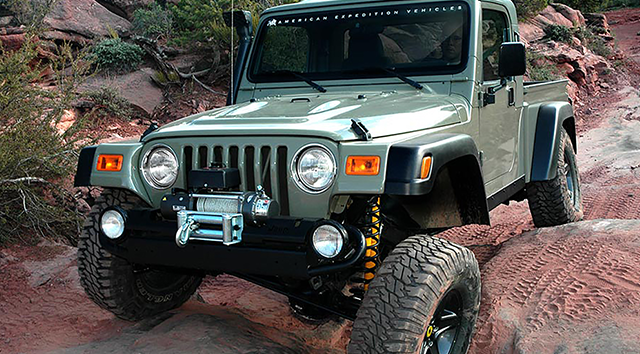
Where Extension Springs Are Used
Extension springs are employed in countless machines across many industries, and if you know where to look, you can find them almost anywhere.
They are common in diagnostic medical devices, such as stretchers, surgical lifts, and certain surgical equipment.
They are engineered into safety-critical aerospace components, such as landing gear assemblies.
You can find them in specialized automotive equipment, such as carburetors.
They are also present in several niche consumer electronics products, such as retractable power cord mechanisms.
FAQs About Extension Springs
How do I calculate the extension of a spring?
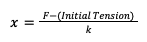
The extension of the spring (x) is calculated using Hooke’s Law, which is an equation that relates the applied force (F) on the spring to the spring extension via the spring stiffness or spring rate (k). To calculate the spring’s elongation, you will also need to know the spring’s initial tension value, a function of the spring’s geometry, because this represents the force required to begin the separation of the helical coils. Therefore, the spring extension is calculated:
What are common extension spring sizes?
Stock extension springs are available in a wide range of wire diameters, outer diameters, and free lengths. There is also a wide variety of available end types to fit any extension spring size.
In short, the extension spring size selection depends on your application’s load requirements, available space, and allowable extension, which determine the size that best suits your mechanism. For example, you should consider whether the wire diameter is sufficient to meet the load capacity of your application. Then, you should also consider other geometric spring properties, such as the extension spring’s end type, to ensure proper fit within your mechanism.
How are extension springs made?
Extension spring coils with simple end types can typically be manufactured via a process called cold coiling. In contrast, complex end types require a specialized dual-function forming process that can quickly create precision loop and hook end configurations after the coils are formed.
After shaping, extension springs are often stress-relieved through specialized processes designed to increase their strength, hardness, or fatigue resistance, depending on the material and application.
Can extension springs be custom-made?
Extension springs can be customized to fit precision dimensions and performance requirements. Common customization options for extension springs include wire diameter, free length, spring rate, initial tension, and end type.
What are the disadvantages of extension springs?
Extension springs subjected to repeated high-frequency extension and retraction cycles can be vulnerable to fatigue. In such applications, the ends of the spring are stress concentrations that are particularly vulnerable to cracking or fracture. Improperly specifying a spring or overextending it can significantly reduce its operational lifetime. However, many of these concerns can be mitigated through proper spring sizing, material selection, and heat treatment.
Why Choose Century Spring
Our Commitment to Quality and Service
Century Spring is a quality-first, ISO 9001 and AS9100D certified, industry-leading spring supplier specializing in stock and custom springs. We offer products and expertise to serve all vertical markets. Our experienced product engineers, knowledgeable product quality team, and skilled manufacturing personnel always deliver the highest quality products to you faster than our domestic and international competitors. All our springs are always Made in the USA.
We offer rapid turnaround, shipping, and delivery on over 40,000+ in-stock designs available to ship today. We understand your schedule constraints and are committed to getting products to you as quickly as possible.
Visit us today to learn and discover how our commitment to quality and customer satisfaction vastly improves your product design process!
Innovation and Customization in Spring Manufacturing
Century Spring offers customized spring design and fabrication services on specialized designs. Our team of highly skilled engineers is ready to help you design the perfect spring solution to meet your application's unique challenge so you can tackle your next pressing challenge. Our custom spring design, fabrication, and delivery process always has a quick turnaround so that you can minimize total product development time and receive your product precisely when you need it.
Don’t waste any more of your valuable design time today; let our spring design experts take the lead!
Get In Touch
Contact Information
Don’t stay stuck aimlessly searching for the answers to your extension spring questions.
Contact Us directly today, and allow our experts to resolve all your questions and guide you to one of our in-stock extension springs that fit your application. We are ready to provide comprehensive engineering support from your earliest design stages to final product approval.
Shop our Springs and Request a Quote today!
Request a Quote and Consultation
We will also help you determine if a custom extension spring solution would better fit your needs. All you have to do is Request a Custom Quotation, and we will partner with you to design a custom extension spring tailored to your application.
If you need immediate assistance, you can always reach us at our dedicated phone line to speak directly with our team: 800-237-5225!
Once we hear from you, our design team will follow up with a quote for a custom solution and be happy to answer any follow-up questions you may have.
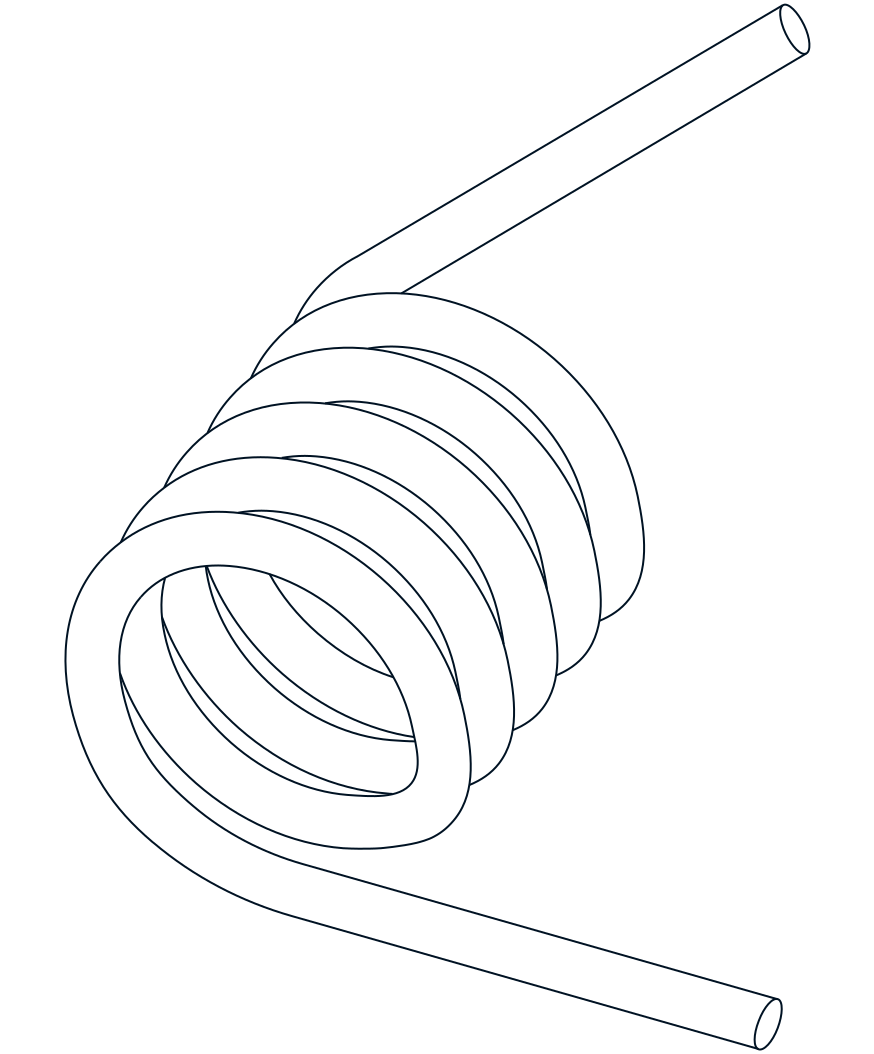
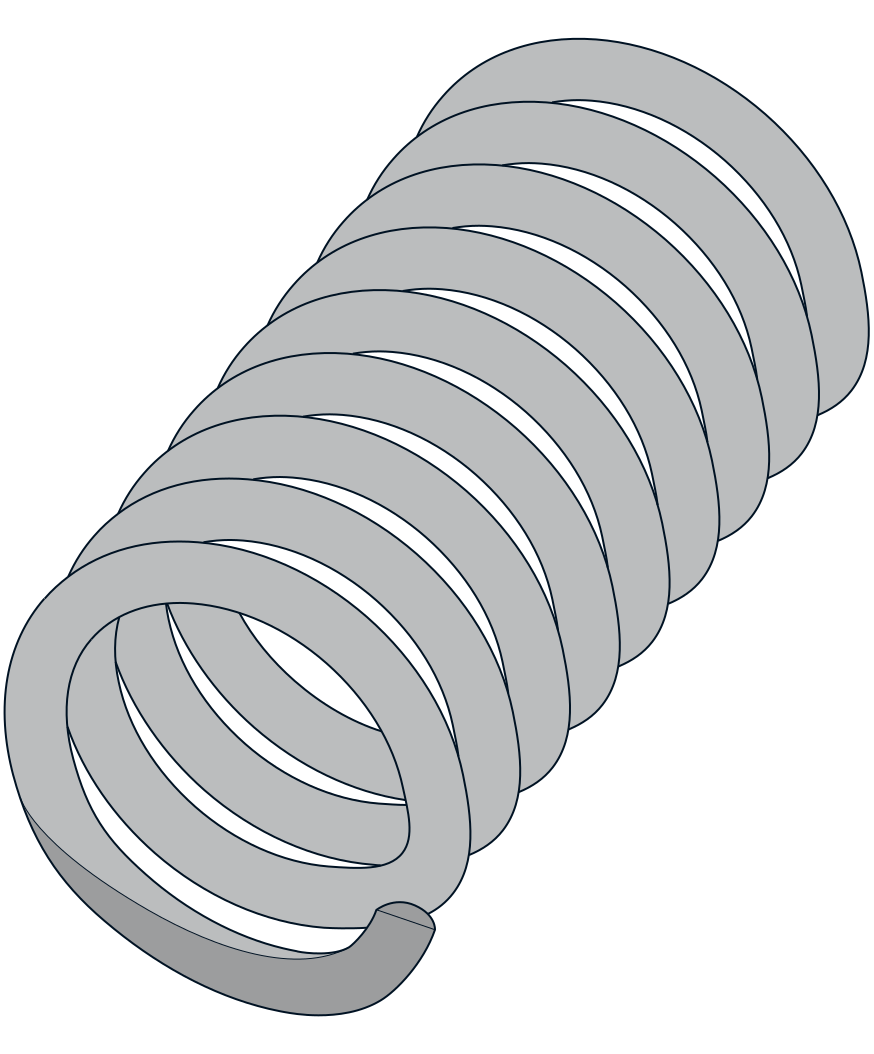
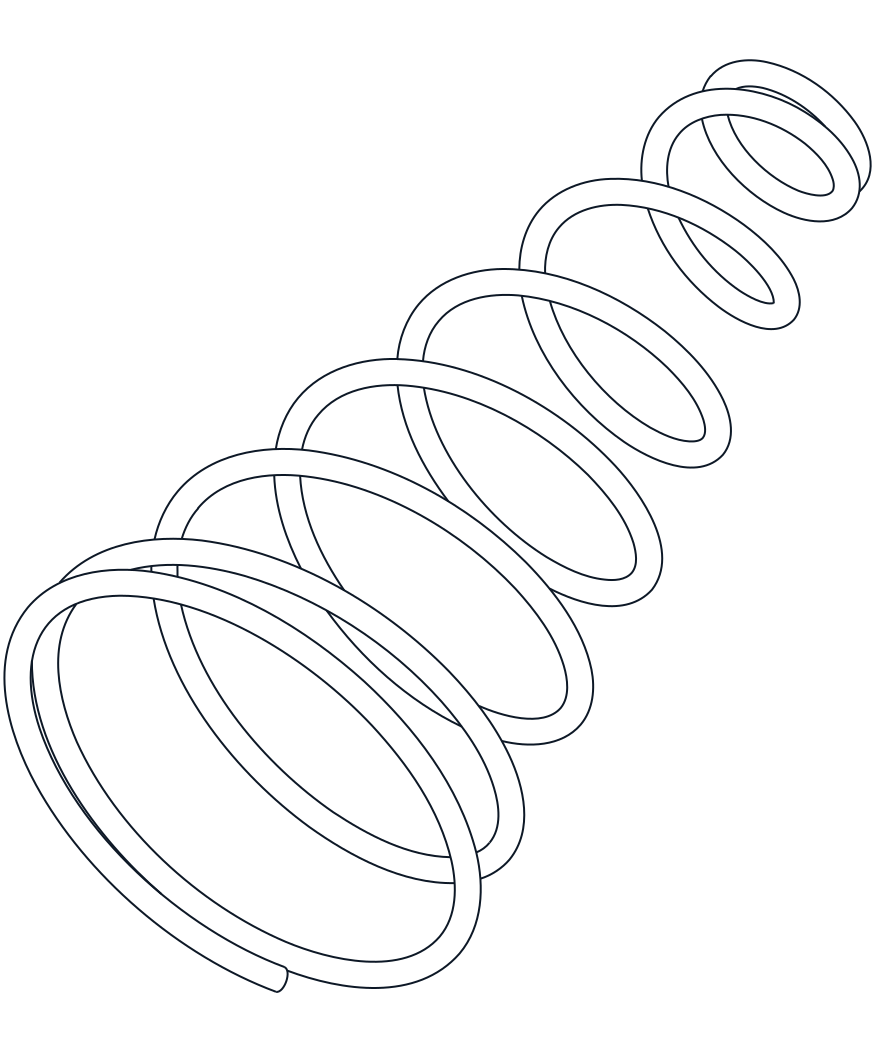
Related Coiled Spring Products
Need a Large Order?
We can design and manufacture a component for your specific application in any quantity. For quantities over 1,000, please request a quote.

Century Spring Catalog
From compression springs and extension springs to retaining rings, the Century Spring catalog contains details on thousands of parts available for same-day shipping. Download the catalog now or contact us to request a physical copy.